Excavator Tooth Bucket: Function, Types, and Maintenance
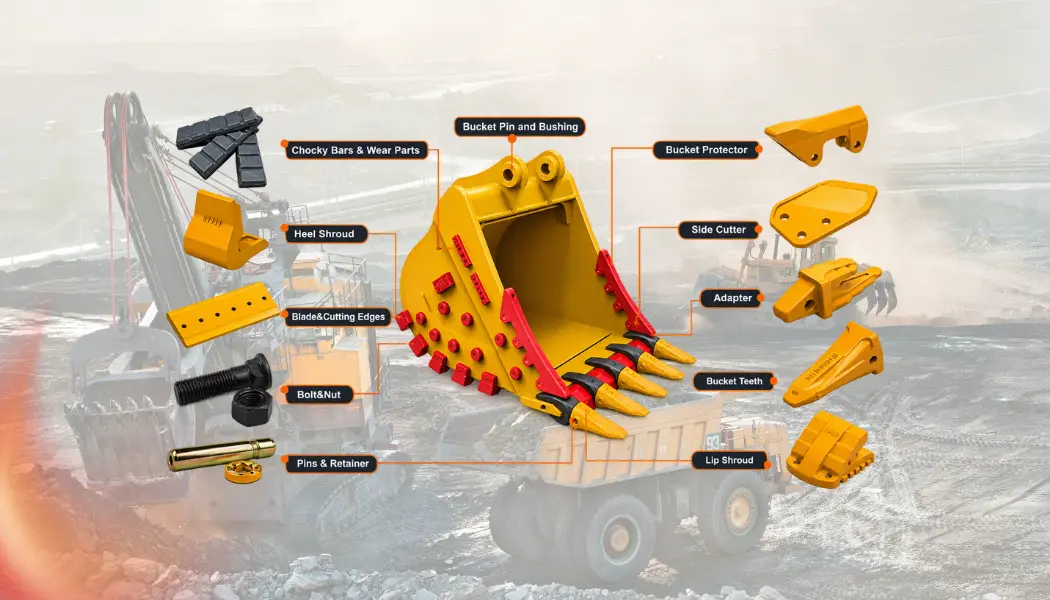
What Is a Tooth Bucket?
A tooth bucket is an excavator bucket equipped with replaceable bucket teeth designed to penetrate, dig, break, and load various types of materials. It is commonly used on excavators, backhoe loaders, and other heavy equipment operating in mining, construction, quarrying, agriculture, and earthmoving applications. The bucket teeth are positioned along the cutting edge of the bucket. They make initial contact with the material and help the bucket penetrate hard or compacted ground.
How Does a Tooth Bucket Work?
During excavation, the bucket teeth are the first components to contact the material. As the excavator applies hydraulic force, the teeth penetrate the ground and help break up or loosen the material. The bucket then collects and carries the excavated material.
A properly selected tooth bucket can support efficient digging performance by providing the appropriate combination of:
- Penetration
- Material handling
- Wear resistance
- Digging force
- Bucket capacity
The right configuration depends on the excavator, material, and working conditions.
Key Components of a Tooth Bucket
An excavator tooth bucket typically consists of several important components:
1. Bucket Teeth.The bucket teeth provide the initial penetration point and are designed to withstand repeated impact and abrasion.
2. Tooth Adapter. The adapter connects the tooth to the bucket lip and provides the mounting interface for the tooth.
3. Pin & Retainer. Pins and retainers secure the tooth to the adapter while allowing worn teeth to be replaced without replacing the complete bucket.
4. Bucket Body. The bucket body collects and carries the excavated material. Its shape and capacity vary depending on the application.
Types of Excavator Bucket Teeth
Different excavation conditions require different tooth designs.
- General Purpose Teeth. General-purpose teeth are commonly used for standard excavation applications involving relatively moderate soil and materials.
- Heavy-Duty Teeth. Heavy-duty teeth are designed for more demanding applications where the bucket is exposed to higher impact and abrasion.
- Penetration Teeth. Penetration-style teeth feature a design intended to help penetrate compact or difficult materials.
- Abrasion-Resistant Teeth. These teeth are designed for applications where prolonged exposure to abrasive materials can accelerate component wear. The appropriate tooth profile should be selected based on the machine size, material type, operating conditions, and bucket configuration.